Your fence protects your property from intruders and keeps livestock safe, but it won’t last forever. Invasive tree roots, harsh weather, and regular use wear on fences until they require repair or replacement. If you need fence repair, call Fence Company Summerville SC immediately.
 In most cases, your homeowner’s insurance will cover your fence repairs. Some common repairs need to be done as soon as possible: sagging sections, mildewed boards, and broken or damaged posts.
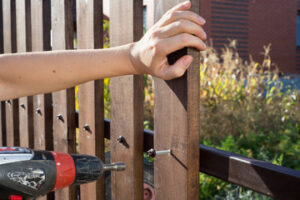
Nails and screws may seem similar in appearance, but the two fasteners perform completely different functions and are best suited for certain applications. Choosing the right fastener for your home improvement project depends on factors like the strength and hold required, how long you plan to work on the job, and the aesthetic appeal of the finished structure.
Screws are great for projects that require a lot of shear strength, or pressure applied in a side-to-side direction. They are also better at resisting withdrawal pressure, or the force that pulls materials apart. Screws have a threaded shaft, which allows them to hold much tighter in wood than nails without a threaded tip.
Nails, on the other hand, are better at resisting tensile strength, or pressure that causes materials to move together or apart. This makes them a great choice for framing, construction and carpentry jobs. Nails are also less expensive than screws, and they don’t require a pilot hole to be driven into a board or piece of lumber.
Many types of nail are available, depending on the type of work you’re doing. Finishing nails, for example, have a smaller head and are designed to blend into the surface of wood. Framing nails, on the other hand, are ideal for construction or framing work and have a smooth shaft that’s designed to be driven with a hammer.
Both nails and screws have a variety of coatings that can help them resist corrosion in wet environments or other adverse conditions. Some nails are galvanized, which helps them stand up to outdoor elements and provide greater resistance to rust. Others have a ceramic coating that can keep them looking good for years, even with exposure to the elements.
The decision between using a nail or a screw should be made before starting any construction or carpentry project. A professional contractor should be able to recommend the best fastener for the job at hand. It’s always a good idea to have both types of fasteners on hand in your tool box, but it’s important to use the correct fastener for each application.
Cracked or Damaged Boards
As any surfer knows, a surfboard isn’t indestructible. It’s not a question of “if” your board will get dinged, it’s a matter of “when.” Heat and UV exposure are the biggest factors, which is why it’s always a good idea to store your board in a cool and shaded place when you’re not using it.
Although surfboards are made of fiberglass, which is relatively durable, a crack or chip in the board can still occur. Typically, these superficial cracks and chips won’t let water in, but they can still weaken the board over time. To fix these cracks, a piece of scrap board as close in size to the damaged area is cut out, and then the edges of this new piece are prepared in the same way that the edges of the damaged board were. A thick glue like Polyfix high viscosity gel is applied to the crack or chip, and then the replacement board is pressed on to fill in the gap and firmly clamped.
For more extensive damage, the board may have to be completely rebuilt. Depending on the condition of the board, this may require replacing the foam top or traction pad with a new one. This is particularly common with older boards that have been left in hot cars or on sunny beaches for extended periods of time.
Another common issue is yellowing of the foam or resin in a board. Both the foam and resin are unstable materials that degrade or yellow over time, especially when exposed to UV light. This is also a cosmetic concern, and can be easily remedied by sanding the foam to smooth it, or by applying fresh resin.
In addition to the damage caused by surfing, accidents and environmental factors, boards can also be damaged by pests. Carpenter ants and bees love a nice wood deck, and termites and wood-boring beetles are also a problem for boards on buildings and homes. Unless the damage to your board is minor, it’s a good idea to hire a professional pest control service to deal with these problems before they spread to other parts of the home or business.
Broken or Rusted Hardware
Many people choose wrought iron fences because they add security and a beautiful appearance to their property. However, wrought iron can become rusted over time and it’s important to find a reputable company that provides wrought iron repair services. This is because if the rust is left untreated, it can deteriorate the durability of the wrought iron and cause it to break or bend.
When working with metal, it’s important to choose nails and screws that can stave off rust for the longest period of time. This is especially true if the hardware will be exposed to the elements like salty ocean air, frequent rain showers and fluctuating temperatures and humidity. Hardware that can hold up to these elements is typically marked as such.
One of the most common problems with rust is that it can make fasteners stick to each other, making them nearly impossible to remove or tighten. This is why it’s so important to check the condition of your metal hardware regularly. If you see rust starting to form, it’s important to take action immediately.
Typically, rust forms as iron oxide that coats the surface of the metal. It can look orange and it will have a rough texture to it. If you have small spots of rust on your metal hardware, it can usually be fixed by simply cleaning it off with a steel wool. However, if the rust has spread to the point that it is impacting the strength or performance of the fastener, you may need to replace it.
If you try to loosen or tighten a rusted screw and can’t get it to move, it’s probably time to try using a penetrating oil. A good quality penetrating oil will penetrate crevices, threads and seams to break the rust bond. WD-40 Specialty Penetrant is one such product that can be used to break through rusted bolts and nuts and make them easier to remove. This product also has a low VOC formula, making it safe to use on various projects around the house and workshop.
Loose or Sagging Sections
When a section of your fence starts to sag, the posts have likely become loose or the fence panels are no longer firmly attached to the posts. This is a relatively easy fix that can be completed fairly quickly. First, walk along your fence line to determine the cause of the problem. Make sure that nothing is leaning or pushing against the fence, and check for any decor or other items that may be weighing down the section. If you find that a post is loose, use a long 2×4 to stretch the fence into a plumb position and re-tighten or screw the post. If the post is severely rotted, it will need to be replaced or reinforced.
If a post has simply shifted in the ground, you can use a heavy-duty fence repair bracket to stabilize it. These are usually made of metal and have an L-shape above the ground, holes for screws, and a stake below. Dig around the base of your fence post, install the bracket, and fill it with concrete to set it.
You can also try to reattach a loose panel by removing the nails or screws holding it in place and then using blocks of wood to prop up the panel, either on its side or at an angle. Once the block is in place, drive screws through the top and bottom rails of the panel to secure it to the posts.
Sometimes, a strong wind or something falling on a fence post can get bent. If the bend is minor, you can use a pair of linesman’s pliers to remove the ties from one end of the bent rail, cut it with a reciprocating saw, and then slip the crimped end of a new section of rail into the other end of the cut rail to straighten it out.
If the post has a more severe bend, you’ll need to dig up the old footing and replace it with fresh concrete or a rigid foam. To do this, you’ll need to use a shovel to clear out several inches (or even up to a foot) of soil from around the base of the post and then break up the old concrete or foam with your shovel.